MultiCraft — Build and Mine!
MultiCraftAdventure
4.210.66K Reviews
- Version
- 2.1.1
- Installs
- 50.00M
- Age Rating
- Everyone
Screenshots
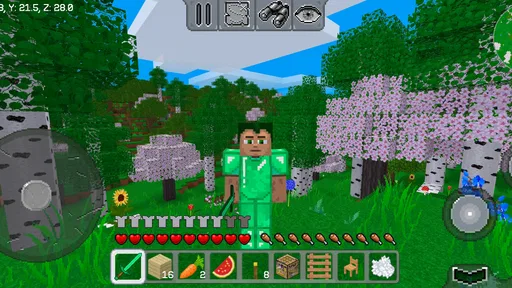
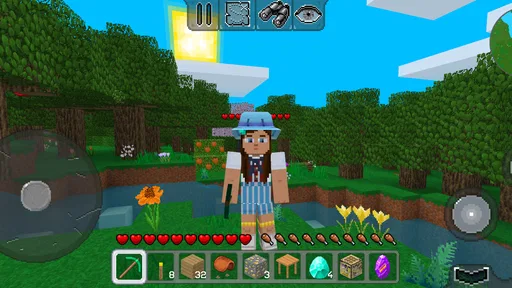
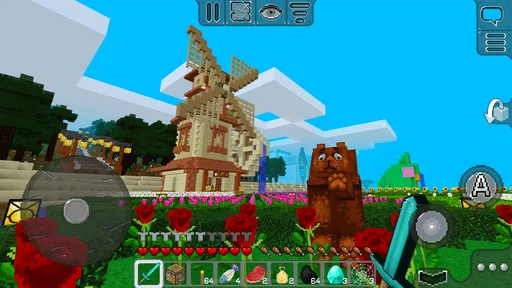
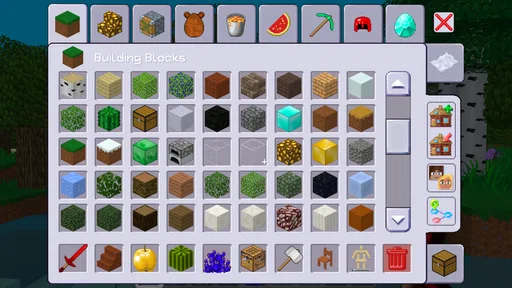
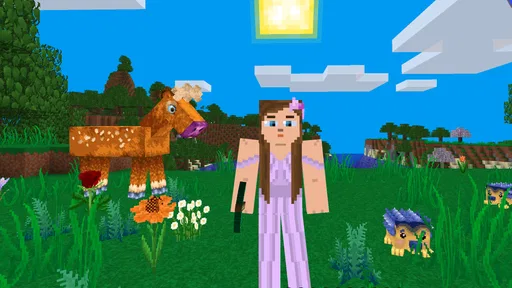
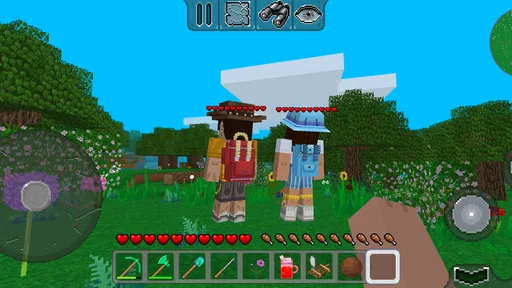
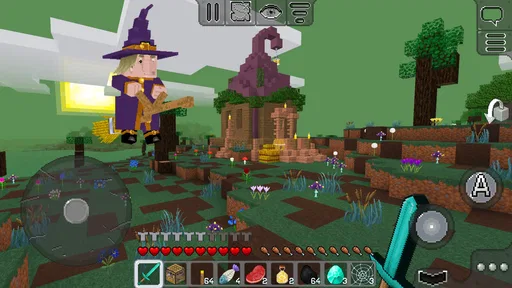
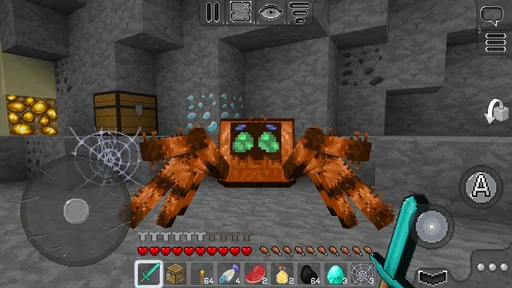
Our Review of MultiCraft — Build and Mine!
 Analysis by Appyee
I approached MultiCraft — Build and Mine! expecting a familiar block-building adventure, and that is exactly what I found: a free game built around exploration, gathering, construction, and the satisfaction of shaping a world with my own hands. Its biggest appeal is not a complicated story or a tightly directed campaign. It is the freedom to decide what kind of session I want, whether that means collecting materials, making a safer base, wandering into unfamiliar areas, or simply experimenting with construction.
That open-ended design makes it easy to pick up for a few minutes and equally easy to lose a longer stretch of time in. I can start with a small practical task and quickly end up redesigning an entire shelter because one wall no longer fits the plan. At the same time, this freedom means the game does not always tell me what to do next. Players who enjoy setting their own goals will probably appreciate that independence; anyone looking for a strongly guided adventure may find it too loose.
How the block-building adventure feels in practice
The central loop is straightforward. I explore, collect useful resources, use them to build, and then venture out again with a better idea of what I want to create. That simplicity is what gives the game its approachable character. I do not need to understand a dense rule system before beginning, and the basic appeal is clear almost immediately: the environment is not just scenery, but material for the next project.
In my experience, the most enjoyable moments come from turning an unplanned discovery into a practical decision. A place that looks interesting can become a temporary landmark, a route can suggest where to establish a base, and a pile of gathered materials can change the scale of a building I had originally imagined as something small. The game rewards curiosity, but it also rewards preparation. Going out without thinking about what I need can make a trip feel inefficient, while a simple goal gives exploration more purpose.
Construction is where the open format becomes most personal. I can build for function, appearance, or a mixture of both. A compact shelter is useful early on, but once I begin thinking about rooms, entrances, storage areas, and surrounding paths, the game becomes a quiet design exercise. I like that a project does not have to be impressive to feel worthwhile. Even a modest improvement to a base gives a clear sense of progress because the world reflects the choices I made.
The strongest reason to play is the freedom to create a personal routine rather than follow a fixed route. Some sessions are about gathering, others about building, and others about seeing what lies beyond a familiar area. That flexibility suits mobile gaming particularly well. I can stop after completing a small task instead of needing to reach a specific story checkpoint, then return later with a new idea.
Exploration works best when I give it a purpose
The adventure side is more satisfying when I avoid wandering without a plan. Before leaving a base, I find it useful to choose one clear objective: collect a particular kind of material, search for a promising building location, or expand the area I already know. This small habit changes the pace of the game. Instead of moving randomly, I am making decisions about distance, safety, and what is worth bringing back.
A practical workflow is to treat the first part of a session as preparation and the second part as execution. I can improve the base, organize what I have gathered, and then leave with a specific project in mind. This reduces the feeling of returning with a bag full of items but no clear use for them. It also makes the building loop more rewarding because each expedition has a visible connection to the next improvement.
Another useful approach is to build recognizable markers near places I expect to revisit. A simple structure or a distinct change in the landscape can make an area easier to identify later. I found this more helpful than trying to remember every route visually, especially once exploration moved beyond the immediate surroundings. It is a small player-created system, but it gives the open world more structure.
Players who enjoy methodical planning can go further by creating separate areas for different tasks. One part of a base can serve as a living space, another as a work area, and another as a display or expansion zone. Even without turning the game into a formal management exercise, arranging the surroundings this way helps prevent every new project from becoming a cluttered pile of unrelated blocks.
Building is more rewarding when function comes first
I recommend starting with a useful structure rather than trying to create a huge landmark immediately. A practical first build teaches how the available materials look together and reveals which spaces I actually use. Once that foundation is comfortable, decorative changes become easier because they are based on experience rather than guesswork.
One trade-off becomes clear after a few sessions: a visually ambitious build can consume a lot of time without improving the way I play, while a plain but well-organized base can make every later activity smoother. I prefer combining the two. I create a functional core first, then add visual details around it. This keeps the game from becoming frustrating when a beautiful design turns out to be inconvenient to navigate.
It is also worth leaving room for revision. My first ideas rarely survive unchanged, and a rigid layout can make later expansion awkward. Building with some spare space allows me to add new sections without tearing down everything that already works. That is one of the more important lessons I took from the game: the best early structure is not necessarily the prettiest one, but the one that leaves options open.
The creative side is especially appealing for players who like making small improvements over time. I do not need to finish a grand project in one sitting. A wall, path, entrance, or room can be completed independently, which makes progress feel manageable on a phone. This is a better fit for me than games that demand long uninterrupted sessions before a meaningful result appears.
What the large player base suggests, and what it does not guarantee
The game has reached over 50 million installs, carries an average rating of 4.3 from around 380 thousand ratings, and comes from MultiCraft. Those figures show that its basic concept has broad appeal, especially among players looking for an accessible building adventure rather than a heavily scripted experience. They also make it easier to see the game as an established choice in this style of mobile play.
Still, popularity does not remove the need to consider personal taste. A large audience may enjoy the freedom, while a player who prefers polished objectives, dramatic storytelling, or highly specialized systems may want something different. I would treat the game’s reach as evidence that the core formula works for many people, not as a reason to assume it will suit everyone.
The age rating is Everyone, which fits the approachable nature of the experience. That makes it a reasonable option for families looking for a creative game with a simple premise, although I would still pay attention to the in-app purchase elements when deciding whether a younger player should use the game independently. The game is free to start, and optional purchases range from $0.79 to $18.99 per item, so spending boundaries are worth discussing in advance.
The main weakness is the lack of a strong sense of direction
My biggest reservation is that the same freedom that makes the game relaxing can also make it feel aimless. When I did not set a personal objective, exploration became less meaningful and building lost some of its urgency. There is nothing wrong with a sandbox that lets players make their own fun, but the game asks me to provide much of the motivation myself.
This affects different players in different ways. If I enjoy inventing projects, the open structure feels generous. If I want the game to present a sequence of memorable challenges, it feels underpowered. Compared with a story-led adventure, this experience offers less narrative momentum. Compared with a more specialized creative sandbox, it may feel less focused on advanced construction techniques. Its position is between those styles, and that middle ground is both its identity and its limitation.
The pace can also become repetitive when every session follows the same pattern without a new personal goal. Gathering, returning, and building are satisfying loops, but they need variety supplied by the player. I found that rotating between exploration, construction, and improvement helped prevent fatigue. Spending every session on resource collection was less enjoyable than alternating practical work with creative projects.
There is another small but meaningful friction point: ambitious plans can create their own workload. Once I begin a large construction project, collecting enough material and maintaining a coherent design takes patience. That is not a flaw in the basic concept, but it means players should not expect every idea to be quick. The game is more rewarding when I accept gradual progress instead of treating every build as something that must be completed immediately.
In-app purchases are another consideration. The game can be played for free, which is important for anyone who wants to test the format before spending money. However, the presence of optional items means the experience is not identical to a completely purchase-free game. I would recommend checking the purchase settings on a shared device and deciding beforehand whether optional spending is appropriate.
Who will get the most from this adventure?
I think this is a good match for players who enjoy creative control, relaxed exploration, and games that can be shaped around personal routines. It works particularly well for someone who likes making a base, improving it gradually, and seeing a familiar area become more organized over time. It is also a sensible choice for players who want a free starting point before deciding whether this style of game deserves more of their attention.
A realistic everyday scenario would be a short evening session after work or school. I might spend the first few minutes checking the base, notice that a storage area is inconvenient, gather what I need, and rebuild that section before stopping. On another day, I could use the same amount of time to follow a marked route and return with materials for a new room. The lack of a mandatory mission structure makes these short sessions possible, because I can define completion in a way that fits my schedule.
It is also suitable for creative players who prefer visible results over score chasing. A finished structure remains part of the world, and that persistence gives small projects a sense of importance. I enjoy games where progress is not only represented by a number or unlock, and this one makes the environment itself the record of what I have done.
I would be more cautious about recommending it to players who need constant objectives or a powerful story. If your ideal adventure has carefully staged missions, character development, and a clear ending, this may feel too open. I would also suggest looking elsewhere if your main interest is highly technical building with a deep specialized system. This game is better understood as an accessible blend of mining, exploration, and construction than as a demanding construction simulator.
For younger players, the Everyone rating makes the game approachable, but the free-to-play structure still deserves adult attention. A child may understand the building mechanics quickly while not fully appreciating the difference between playing for free and choosing optional items. Setting expectations before handing over the device would make the experience more comfortable for everyone.
How it compares with familiar alternatives
The obvious comparison is with other block-based sandbox adventures. Against a story-driven alternative, MultiCraft gives up guided narrative in exchange for a more self-directed rhythm. I am less likely to wonder what the next scripted chapter is, but I am more likely to feel that the world belongs to my own plans. That distinction matters more than small differences in presentation.
Compared with a purely creative building game, the mining and exploration loop gives construction a practical reason to exist. I am not simply placing blocks in an empty design space; I am often gathering, returning, adapting, and deciding what deserves my time. That extra loop can make a project feel earned, although it can also slow down players who only want unrestricted building.
Against a survival-focused alternative, the game’s appeal is its approachable balance. It does not need to be treated as a harsh test of endurance to be enjoyable. I can concentrate on making a home and exploring at my own pace, but players seeking constant pressure may find the experience calmer than they prefer. In other words, it is a better fit for creative momentum than for relentless challenge.
My advice is to choose based on the reason you enjoy block games. Pick this one if you want a free, flexible adventure where your own projects provide the structure. Choose a more directed game if you want the software to keep presenting objectives. Choose a more specialized creative tool if detailed construction mechanics matter more to you than gathering and exploration.
Version, cost, and the decision to install
The current version is 2.0.18, and the game remains free to download and begin playing. That combination makes it easy to approach without a large commitment. I would spend some time testing the basic loop before considering any optional purchase, because the important question is whether I enjoy creating my own goals. If I do not, extra items will not solve the game’s central lack of direction.
The release date of Jul 31, 2019 also places it among the longer-running choices in this style of mobile game. For me, that gives the experience a sense of familiarity rather than novelty: its appeal comes from a proven basic formula, not from trying to reinvent the genre. Anyone installing it today should approach it as a dependable sandbox adventure, not as a narrative blockbuster.
My practical recommendation is to begin with a modest base, mark routes that seem worth revisiting, and keep each session focused on one achievable project. That approach exposes the game’s strengths quickly and reduces the chance of feeling lost. It also helps answer the most important personal question: do you enjoy supplying your own objectives?
After spending time with the game, I see MultiCraft — Build and Mine! as a flexible and accessible adventure for players who like turning simple materials into personal spaces. Its strongest feature is the freedom to choose the pace and purpose of play. Its most important weakness is that this freedom can feel empty when I do not bring a plan of my own.
I would recommend it to creative explorers, casual builders, families looking for an Everyone-rated option, and anyone who likes progress that remains visible in the world. I would skip it in favor of a story-led or more technically focused alternative if clear objectives, advanced systems, or constant challenge are essential. For the right player, though, the modest premise is enough: gather something useful, build something personal, and return later to make it better.
Privacy and Permissions
See what permissions an app requests and how it handles your data.
- Location
- approximate location (network-based), precise location (GPS and network-based)
- Phone
- read phone status and identity
- Wi-Fi connection information
- view Wi-Fi connections
- Device ID & call information
- read phone status and identity
- Other
- view network connections, full network access, control vibration, prevent device from sleeping, Google Play license check, read Google service configuration
Verdict
Strengths of MultiCraft — Build and Mine!
- Creative building is easy to start, even for players new to sandbox games.
- Survival gameplay adds exploration, resource gathering, and crafting goals.
- The block-based visuals run smoothly on many older Android and iOS devices.
- Offline play lets you build without a constant internet connection.
- Multiplayer makes sharing worlds and projects with friends more enjoyable.
Limitations of MultiCraft — Build and Mine!
- The interface can feel cramped on smaller phone screens.
- Large worlds may require considerable storage over time.
- Some controls take practice, especially during combat and precise building.
- Progress can feel repetitive once familiar resources and recipes are unlocked.
- Ads or optional purchases may interrupt the experience, depending on the version.
Similar Picks in This Category
View All
Roblox
Roblox Corporation4.2

Pokémon GO
Niantic, Inc.3.5

Ninja warrior: legend of adven
TOH Games4.6

Ninja Arashi
Black Panther4.6

Eyes - The Horror Game
Fearless Games sp. j.4.5

Critical Action:Gun Strike Ops
FPS Shooter & Action Game4.3
Frequently Asked Questions
What is MultiCraft — Build and Mine!?
MultiCraft — Build and Mine! is a sandbox adventure game inspired by block-building and survival experiences. You can explore randomly generated worlds, collect resources, craft tools, build shelters, and encounter different creatures. The game gives you considerable freedom to create structures or focus on survival, making it suitable for players who enjoy creative construction, exploration, and open-ended gameplay rather than a fixed storyline.
Can I play MultiCraft — Build and Mine! offline?
Yes, MultiCraft — Build and Mine! can generally be played offline, which makes it convenient when you do not have a reliable internet connection. Offline play is mainly intended for exploring, gathering materials, crafting, and building in your own world. However, certain multiplayer-related features, online content, advertisements, or updates may require an active connection, depending on the version and device you use.
Does MultiCraft — Build and Mine! support multiplayer?
MultiCraft — Build and Mine! may offer multiplayer or online world features, allowing players to connect with others and share a building or survival experience. Availability can vary according to the platform, app version, server status, and regional restrictions. Before downloading, check the current store description and permissions, because online modes may require an internet connection and can provide a different experience from single-player gameplay.
Is MultiCraft — Build and Mine! suitable for children?
The game is generally approachable for younger players because its main activities involve building, exploration, crafting, and resource collection. Nevertheless, parents should review the age rating and supervise online functions if multiplayer or chat features are available. Advertisements, in-app purchases, and interactions with other players can also be relevant, so family settings and device-level purchase restrictions are recommended for children.
Does MultiCraft — Build and Mine! contain in-app purchases or advertisements?
The availability of advertisements and optional in-app purchases can depend on the device, region, and version installed from the app store. Free access may be supported by advertising, while purchases could remove ads or provide additional benefits. It is worth checking the listing before installation and reviewing the payment settings on your Android or iOS device, especially if children will be using the application.
Play our best games!


